


Technology has always shaped the relationship between criminal behavior and law enforcement. In the 1930s, Bonnie Parker and Clyde Barrow terrorized Texas and the surrounding region in stolen Ford V8 automobiles, vehicles fast enough to outrun the rural police forces of the era. Their two-year crime spree across Texas, Oklahoma, Missouri, and Louisiana was enabled in meaningful part by the technological advantage their cars gave them over law enforcement that lacked the equipment, communication, and coordination to respond effectively.
The eventual capture of Bonnie and Clyde led to the Texas Rangers adapting their tactics to match the criminals’ speed advantage. The lesson is not unique to the 1930s. The story of crime and law enforcement is, in large part, a story of technological adaptation.
Today, a similarly significant technological shift is underway on Texas roads.
The Night the Future Blocked West 6th Street
Winters & Chidester serves the Austin metropolitan area, where self-driving robotaxis have become a visible and growing presence on city streets. That presence came into troubling focus on March 1, 2026, when a gunman opened fire on the patio of Buford’s Backyard Beer Garden on West 6th Street, killing three people and wounding fourteen others in what the FBI opened as a potential terrorism investigation.[1]
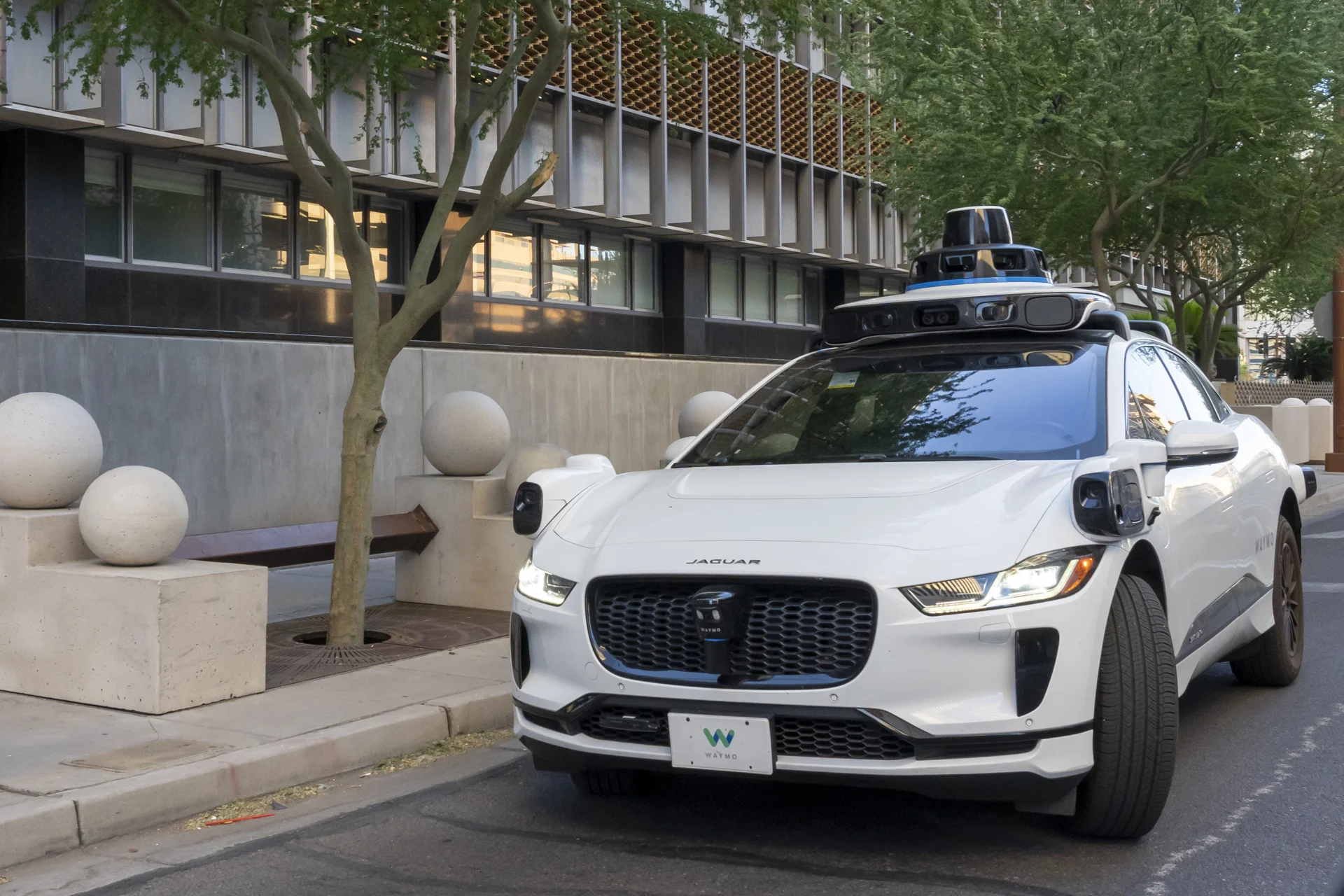
As Austin-Travis County EMS paramedics raced toward the scene, a Waymo self-driving robotaxi sat mid-U-turn in the roadway, blocking access. An Austin police officer was able to clear the vehicle within approximately two minutes, but Austin officials later confirmed that five Waymo vehicles in total had obstructed the first-responder corridor that night.[2]
That incident was not an isolated accident. It was a preview of a complex and unresolved set of questions that autonomous vehicles pose for crime and policing in Texas, questions that demand proactive legal answers.
How Self-Driving Cars Work and Where Texas Stands Today
Understanding the criminal and law enforcement implications of autonomous vehicles begins with understanding how they operate.
Individual self-driving vehicles navigate using a layered suite of sensors:
- LiDAR systems fire millions of laser pulses per second to create a real-time three-dimensional map of the vehicle’s surroundings.
- Radar tracks the speed and position of moving objects regardless of weather or lighting conditions, and high-resolution cameras provide 360-degree visual context, reading traffic signals, lane markings, and road signs that neither LiDAR nor radar can supply alone.[3]
- A powerful onboard computer fuses these inputs in real time against pre-built high-definition maps, allowing the vehicle to plan and execute safe navigation without any human involvement.
The Mesh Network: How Fleets Think Collectively
Beyond individual vehicle operation, many autonomous vehicles are part of broader connected systems. Vehicle-to-Everything (V2X) networks allow vehicles to communicate with each other and with road infrastructure, sharing real-time data about hazards, traffic conditions, and road status.[4]
In practice, this means a fleet of connected AVs can operate as a coordinated network, each vehicle benefiting from the observations of all others. These networks extend a vehicle’s awareness far beyond what its own onboard sensors can detect, and, as discussed below, create potential vulnerabilities that extend equally far beyond the individual vehicle.
The Texas Standard
Texas has positioned itself as a national leader in autonomous vehicle adoption. Austin currently hosts six AV operators at various stages of deployment. Waymo and Tesla operate fully commercial robotaxi services, while Avride, ADMT, Zoox, and Motional are conducting testing and mapping operations.[5]
Waymo alone has deployed approximately 300 robotaxis covering 90 square miles of Austin, a digital footprint that currently stretches through north Austin neighborhoods up to McNeil and Howard Lane. These operational boundaries creep past SH 45 and into Round Rock, providing fully driverless commercial rides with a reported 4.9-star rider rating and 500,000 paid rides per week globally.[6]
Texas enacted its first AV statutory framework with Senate Bill 2205 in 2017, making it among the first states to authorize fully automated vehicles to operate on public roads without a human occupant and to preempt local regulation of AV systems.[7]
In 2025, the 89th Texas Legislature passed Senate Bill 2807, creating the first mandatory authorization program for commercial AV operations administered by the Texas Department of Motor Vehicles, including a new requirement that operators certify they have provided the Texas Department of Public Safety with a plan describing how emergency responders should interact with their vehicles during incidents.[8]
Enforcement of SB 2807’s authorization requirement began May 28, 2026.
The Traffic Stop at Risk
Traffic stops are among the most productive tools available to Texas law enforcement for interdicting drugs and weapons. The U.S. Supreme Court’s 1996 decision in Whren v. United States holds that any observed traffic violation, however minor, provides constitutionally sufficient justification for a vehicle stop, giving officers broad legal authority to initiate contact with a vehicle and its occupants based on infractions as minor as failing to signal a lane change or driving a few miles over the speed limit.[9]
For Texas, located along major trafficking corridors connecting the southern border to population centers across the interior of the country, this authority has yielded enormous results.
In October 2020, a K-9 unit alerting on a refrigerated tractor-trailer during a routine stop in Denton County led to the discovery of 1,950 pounds of methamphetamine and heroin, valued at approximately $45 million and linked to the Jalisco New Generation Cartel, the single largest seizure in DEA Dallas Division history.[10] In April 2023, an Operation Lone Star trooper stopping a vehicle in Mission, Texas, discovered approximately fourteen pounds of fentanyl.[11]
These seizures represent a systematic reality: Texas highways are major drug-trafficking corridors, and vehicle stops are a primary mechanism of interdiction. This is amplified by the starkly contrasting legal landscapes of the Austin metropolitan area.
In Travis County, a shifting political and judicial climate has led to a more relaxed posture toward minor possessory offenses. But directly to the north, across the Williamson County line, law enforcement and prosecutors maintain a fiercely guarded, traditional "law-and-order" reputation.
For a Williamson County Sheriff’s deputy patrolling the I-35 corridor in Georgetown, the pretextual traffic stop is a vital, actively deployed weapon in the war on drug trafficking. When those stops disappear, the cultural and procedural friction between these two neighboring jurisdictions will only intensify.
The Law Enforcement Challenge from Perfect Driving
Autonomous vehicles pose a direct and serious threat to this interdiction model. Self-driving cars are programmed to follow traffic laws with precision. They do not speed, run red lights, make illegal turns, or exhibit the driving behaviors that currently provide legal justification for most traffic stops.
Professor Elizabeth Joh of the University of California Davis School of Law, writing in the New York University Law Review, identified this problem directly. The traditional justification for pretextual vehicle stops validated by the Supreme Court in Whren effectively disappears when an autonomous driving system, incapable of committing traffic infractions, is responsible for operating the vehicle.[12]
The FBI’s own Law Enforcement Bulletin has similarly warned that “if a vehicle was driven by autonomy with precision, probable cause stops based upon human decision or mechanical error may be severely limited,” and that criminals will exploit autonomous vehicles to transport drugs and firearms precisely because those vehicles are unlikely to be pulled over.[13]
For Texas, where traffic-stop-based drug interdiction is a foundational law enforcement strategy, the large-scale adoption of autonomous vehicles presents a structural challenge that cannot be offset by simply deploying more officers.
New Criminal Opportunities Created by Self-Driving Cars
The criminal opportunities created by self-driving cars extend well beyond the erosion of traffic-stop interdiction.
Phantom Cargo: Unattended Mules on Texas Highways
The most straightforward risk is the use of AVs as unattended drug and weapon transport vehicles. An autonomous vehicle driving cargo across the state, or across state lines, with no human occupant offers traffickers a method of transport.
For local interdiction units, a driverless vehicle originating from the border and heading up the I-35 split through Waco or navigating the SH-130 toll road to bypass Austin traffic completely eliminates the most common law enforcement contact point: the driver
There is no occupant to observe nervously, no erratic driving to notice, and no human error to trigger a legitimate traffic stop. The FBI has specifically identified this as a near-certain eventual criminal use, warning that autonomous vehicles will be used to transport drugs, firearms, and human trafficking victims in ways that are far harder for law enforcement to detect or interdict.
Red-Light Districts on the Move
Self-driving cars also create a novel environment for prostitution and sex trafficking. Research published in the Annals of Tourism Research predicted as early as 2018 that the private, enclosed, driverless space of an AV would be exploited for commercial sexual activity, what researchers described as moving a red-light district “on the move.”[14]
That prediction was not purely theoretical. In 2023, users of Cruise robotaxis in San Francisco publicly confirmed that sexual activity was occurring inside driverless vehicles, an environment in which neither a driver nor any witness is present to observe, deter, or report the activity.[15]
For law enforcement, addressing criminal activity inside a moving autonomous vehicle raises serious constitutional and practical challenges that current law does not adequately address.
Digital Hijacking
Perhaps the most alarming criminal frontier opened by autonomous vehicles is the threat of cyber-enabled crime. Security researchers have demonstrated that production vehicles are vulnerable to remote compromise.
In 2015, researchers Charlie Miller and Chris Valasek hacked a Jeep Cherokee through its cellular connection, remotely manipulating steering and braking while the vehicle was in motion, leading to a recall of 1.4 million vehicles.[16]
In 2022, a security study identified exploitable API vulnerabilities across sixteen major automakers that allowed remote unlocking, engine starting, and vehicle tracking using only a vehicle identification number.[17]
Ransomware-style attacks, in which an attacker seizes remote control of a vehicle, traps a passenger inside, and demands payment before releasing control, have been identified in peer-reviewed academic research as a near-term threat, and partial real-world precursors involving remote vehicle lockouts and ransom demands emerged in 2025.[18]
At the most serious scale, coordinated manipulation of AV fleets could be used to block emergency response corridors or disable major traffic arteries. Former FBI Director Christopher Wray specifically warned that self-driving cars create new opportunities for terrorist attacks, including by “confusing or distorting algorithms to cause physical harm.” [19]
The March 1, 2026, incident on West 6th Street, noted at the top, while the result of an AV’s own confusion rather than deliberate manipulation, previews exactly what a deliberate exploitation of that vulnerability could look like.
Law Enforcement Opportunities in the Age of Autonomous Vehicles
Self-driving cars also create significant new opportunities for law enforcement, provided Texas builds the legal and institutional framework to take advantage of them.
Autonomous vehicles are, in a meaningful sense, rolling surveillance platforms. They continuously record their surroundings with cameras, LiDAR, and radar, generating a detailed record of everything in their field of perception during operation.
Law enforcement has already begun obtaining this data through warrants and subpoenas served on AV companies as third-party data custodians. By mid-2023, police in San Francisco and Maricopa County, Arizona, had served at least nine warrants on Waymo and Cruise for crimes ranging from hit-and-runs to homicides, with Waymo footage proving useful in multiple investigations.[20]
This practice parallels the emerging use of conventional connected-vehicle data in criminal cases. In the nationally prominent Alex Murdaugh murder trial, an FBI vehicle data analyst testified that location data and Bluetooth connectivity records from Murdaugh’s Chevrolet Suburban directly contradicted his alibi for the night of the murders.[21]
As AVs grow more prevalent on Texas roads, they will become an increasingly important source of evidence, a fleet of independent, always-on witnesses operating throughout the state’s cities.
The Third-Party Doctrine vs. Your Digital Footprint
For Central Texas defense attorneys, this "rolling witness" reality sets up an immediate, high-stakes battleground over the Fourth Amendment, one that will be fought explicitly in local courtrooms.
When a Waymo vehicle captures footage of a crime on West 6th Street in Austin, or an AV’s data log places a vehicle near a suspected drug transaction off the downtown square in Georgetown, who owns that data, and what standard must police meet to get it?
If law enforcement bypasses the warrant requirement by arguing that third-party AV corporations hold the data, it threatens to utterly erode privacy protections for passengers. Local defense strategies will have to aggressively challenge these digital seizures, forcing Williamson and Travis County judges to decide whether the privacy boundaries of a Texas vehicle extend to the petabytes of data it constantly transmits to corporate servers.
When a Georgetown Police Department detective or a Travis County Sheriff’s investigator bypasses a traditional vehicular search to demand cloud logs directly from corporate headquarters, the battle lines of Texas privacy law will officially be redrawn
Kill Switches: The Reality of Remote Immobilization
Remote shutdown capability represents another potentially transformative tool for law enforcement. General Motors’ OnStar system has allowed police to remotely disable stolen vehicles during pursuits since 2009, a capability that has proven both effective and safety-enhancing.[22]
As autonomous vehicles increasingly communicate with remote servers during ordinary operation, the technical infrastructure for authorized remote immobilization exists and is expanding.
A statutory framework permitting law enforcement-requested AV immobilization during active pursuits or emergencies could eliminate dangerous high-speed chases, reducing harm to officers, suspects, and innocent bystanders while also providing first responders with an authorized tool to clear blocked emergency corridors.
Texas lawmakers should consider whether to formalize such a framework before it is needed in an emergency rather than after.
The Need for Proactive Texas Legislation
Texas has made meaningful strides in establishing a regulatory framework for autonomous vehicle deployment. The 2017 enactment of SB 2205 made Texas one of the first states to authorize fully driverless commercial operation, and the 2025 passage of SB 2807 established a mandatory authorization system for commercial AV operators and a first-responder safety plan requirement.
At the federal level, the National Highway Traffic Safety Administration proposed its AV Safety, Transparency, and Evaluation Program (AV STEP) in January 2025, creating a voluntary reporting framework for ADS-equipped vehicles, and the Trump Administration’s Department of Transportation has announced a deregulatory framework aimed at accelerating AV deployment nationally.[23]
These are important steps in enabling the technology. But the criminal justice dimensions of autonomous vehicle technology, including how it will be exploited by criminals, how law enforcement will respond, and what legal tools officers need, remain almost entirely unaddressed in Texas law.
The Lessons of Cyber Crime: Why Reactive Lawmaking Fails
History provides a cautionary example of what happens when legislatures wait. Congress first recognized the threat posed by computer-based crime in the mid-1970s, as computer networks began demonstrating their vulnerability to misuse.
Yet the first federal computer crime statute did not arrive until the Comprehensive Crime Control Act of 1984, nearly a decade after the threat was identified.[24] The Computer Fraud and Abuse Act followed in 1986, a law written before the World Wide Web existed and before anyone could have fully anticipated the scale of the internet economy it would be called upon to govern.[25]
The result was decades of inadequate legal tools, with law enforcement and prosecutors struggling to apply a statute built for a pre-internet world to an explosion of cybercrime that the law’s drafters never envisioned.[26]
The autonomous vehicle moment is directly analogous. The technology is arriving rapidly; the criminal implications are clearly foreseeable. The legislative window is open, but it will not remain so indefinitely.
Texas should act now, while AV deployment is still scaling, to address the criminal justice implications of this technology before the problems become entrenched.
Specifically, the Legislature should:
- Consider establishing clear warrant requirements for law enforcement access to AV sensor data and footage, ensuring constitutional protections keep pace with the technology rather than trailing it by years.
- Create a statutory framework for authorized remote immobilization of autonomous vehicles by law enforcement during active pursuits and emergencies.
- Targeted criminal penalties for cybersecurity offenses against AV systems, including remote hijacking and ransomware attacks targeting vehicles, should be considered, along with enforceable standards for AV operator response to declared emergencies that go beyond the certification requirement of SB 2807.
The Legislature should not wait for a fatality attributable to AV obstruction of emergency services to prompt action. In San Francisco in 2023, a patient with life-threatening injuries died after Cruise robotaxis delayed an ambulance response.[27] Austin came close to a similar situation on the night of March 1, 2026.
Writing the Rules Before the Next Crisis
Self-driving cars represent both one of the most significant challenges and one of the most significant opportunities for law enforcement in Texas in a generation.
They will disrupt long-established policing strategies, most notably the traffic-stop-based drug interdiction that has been central to Texas’s effort to combat cartel trafficking along its highway corridors. They will create new criminal opportunities, from unattended drug transport to cyber-enabled vehicle hijacking to potential terrorist applications.
However, they will LAO offer law enforcement powerful new investigative tools, provided the legal framework to use those tools is built in advance.
What Texas cannot afford is the reactive posture that characterized the legislative response to the internet age, when Congress spent a decade watching the problem develop before passing a statute already years behind the technology. The self-driving car is already on Austin’s streets. The criminal implications are already being discussed in FBI bulletins, law review articles, and peer-reviewed journals. The time to write the rules is now, before the next incident on West 6th Street, not after.